
Fear, Violence, and Legitimacy
Once Upon a Time in HollywoodThis thread examines how characters use force and claims of legitimacy, from Cliff's wartime record to Caleb's coercion and Johnny Madrid's private justice.
increasing Bearing strength in each event
 decreasing
Bearing strength in each eventdecreasingViolence Earns a Medal

Violence Earns a Medal
Force in an authorized war
Cliff Booth's military record includes extraordinary confirmed kills and a dangerous prison-camp escape. The institution recognizes his violence as service and honors him for it.
A moral inheritance
The medals establish genuine courage, but they also give Cliff a lasting confidence in the legitimacy of force. That confidence follows him into civilian conflicts where the rules are far less clear.
A Medal Used as Threat

A Medal Used as Threat
Authority borrowed from service
Cliff displays his Medal of Valor to two men who threaten him and Abigail. He frames his wartime kills as a reason the police will believe his version of events.
Legitimacy as leverage
The medal is not merely a record of service; it becomes a tool in an anticipated legal story. Cliff's later shooting of the men exposes how public respect for military sacrifice can protect private violence.
The Murderer Everyone Suspects

The Murderer Everyone Suspects
Reputation outside the courtroom
The stunt community believes Cliff may have killed Billie, though no one can prove what occurred on the boat. Colleagues interpret her drinking and their public arguments as clues.
Suspicion without punishment
The case is ruled a misadventure, leaving social knowledge and legal proof at odds. Cliff remains free, while the suspicion alters his standing on every set.
Caleb's Rule by Fear

Caleb's Rule by Fear
Coercion in a lawless town
Caleb DeCoteau controls cattle, merchants, and the local saloon through threats and violence. He depends on the distant arrival of formal law taking longer than his ability to profit.
Principle tested by brutality
The story asks whether Murdock Lancer can resist without becoming what he opposes. Caleb's power grows because he is willing to act outside rules that constrain his targets.
Johnny's Private Justice
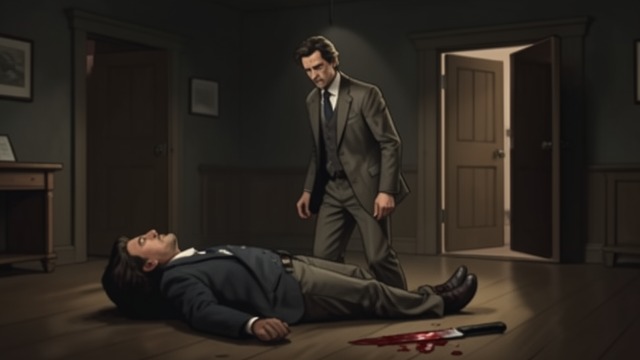
Johnny's Private Justice
Law fails a child
Johnny sees his mother's wealthy killer escape conviction under biased circumstances. The institutions that might have delivered justice instead confirm his sense of abandonment.
Revenge replaces legitimacy
Johnny kills the murderer and later the jurors. His actions answer a personal grievance but repeat the violence he believes justice failed to stop, leaving his identity divided between victim, avenger, and gunfighter.
During Cliff's wartime service in World War II
During Cliff's Cleveland encounter
After Billie Booth's death in 1966
During the fictional Lancer conflict
After Marta Lancer's killer is acquitted
